What Ivy is for
Ivy is a network for researchers, organized by research topic. You start from the questions you work on, not a title: claim the topics, see who else is working on the same ones, and find the conferences where that work meets in person.
Behind the network, Ivy is a technology platform to manage both conferences and scientific societies, designed to facilitate community engagement, event discovery, and networking.
Design discovery: the mark
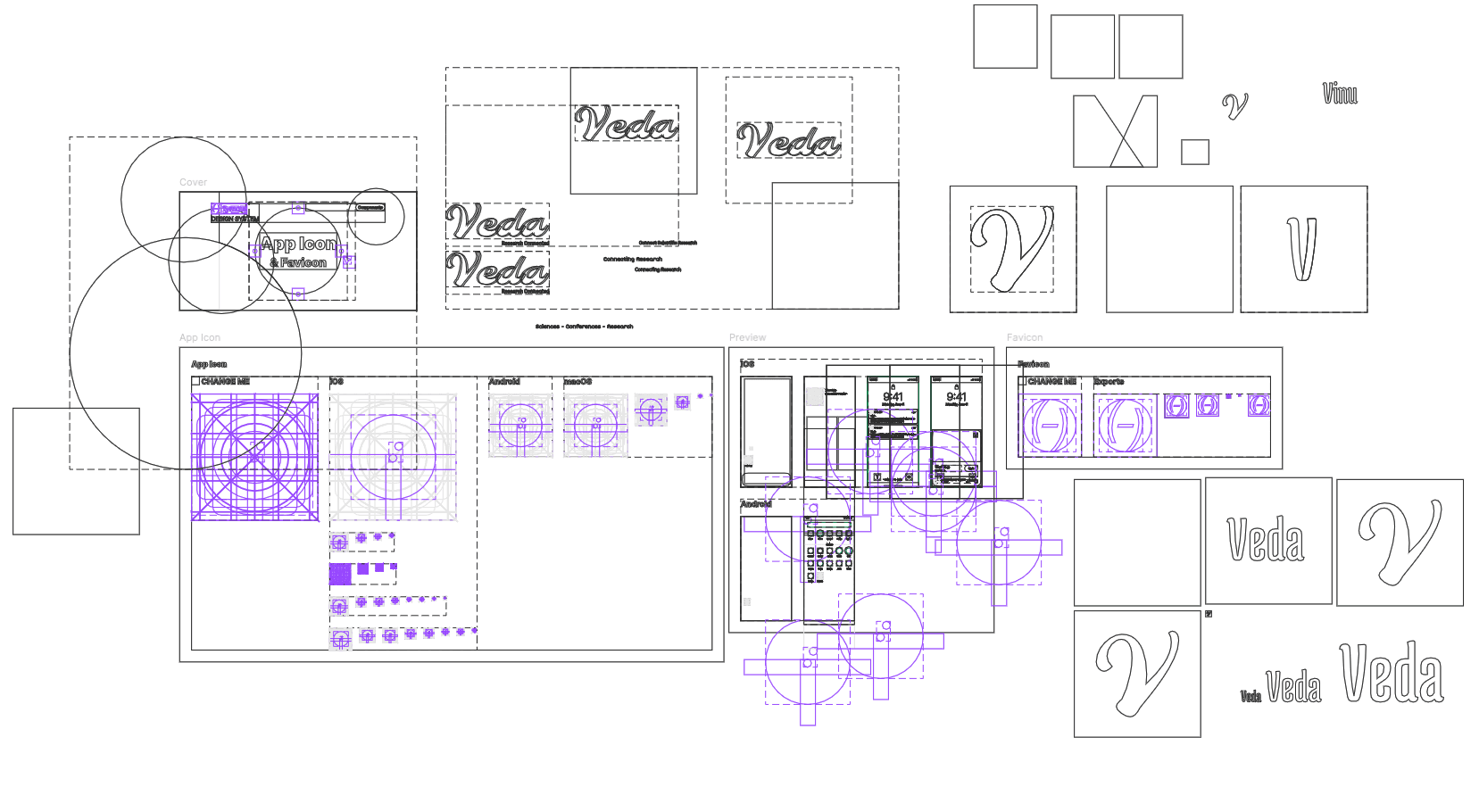
Before committing to a logo, I'm exploring directions against the places it has to live: app icons, favicons, the wordmark, and the product itself. Two directions have held up so far: a serif V with an inline stroke, and a single-stroke script V.
The sheet below is the working file, not a final. It tests each direction at icon and favicon sizes across iOS, Android, and macOS, pairs it with the wordmark, and drops it into phone previews to see how it reads in context.
Next is narrowing to one direction and refining it. More once the mark lands.
What's next: user research
The risk with Ivy is building something people say they like but never use. So the next step is interviews with researchers and conference organizers, run the way The Mom Test describes: ask about their lives, not my idea.
- Talk about what they do today, not what Ivy could do for them
- Ask about specific past events, like the last conference they attended or the last collaborator they found, instead of opinions or hypotheticals
- Listen more than I talk, and don't pitch
- Treat compliments as noise; commitments of time, intros, or money are the real signal
The questions start simple. How did you find the last conference you went to? How do you keep up with who else is working on your topic? What did you try that didn't work?
The answers decide what gets built first, and whether a network organized by research topic is the right bet.